

Waste Heat Recovery Heat Exchange Equipment: Core Devices for Industrial Energy Conservation and Resource Recycling
Waste heat recovery heat exchange equipment refers to systems that capture waste heat from high-temperature flue gas, wastewater, steam, and other carriers in industrial production through specialized heat exchange structures, converting it into usable thermal or electrical energy. It not only reduces energy consumption and carbon emissions for enterprises but also improves resource utilization, playing a crucial role in industries such as chemical, power, metallurgy, and food processing.
Cold-wound galvanized finned tubes, as core heat exchange elements suitable for medium-low temperature and mild corrosion scenarios, are often used in deep collaboration with this type of equipment to jointly build a highly efficient energy-saving system.

I. Equipment Classification: Precisely Divided by Waste Heat Carrier Characteristics
Waste heat recovery heat exchange equipment can be divided into three main categories based on the form, temperature, and pressure differences of the waste heat carrier. Each category has significantly different structural designs and core component selections to adapt to the waste heat recovery needs of different industrial scenarios.
1. Flue Gas Waste Heat Recovery Equipment
Flue gas is the most common waste heat carrier in industrial production, with a temperature range covering 150℃-1000℃, and is widely present in the emission systems of boilers, kilns, incinerators, and other equipment.
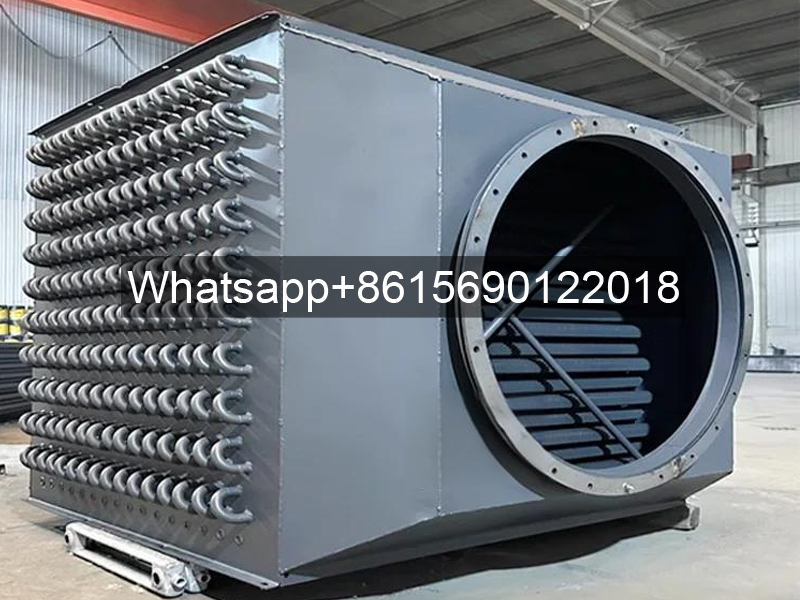
This type of recovery equipment uses a “finned tube heat exchanger” as its core. Different heat exchange elements are selected according to the flue gas temperature: For medium and low temperature flue gas (150℃-400℃), cold-wound galvanized finned tubes are commonly used as heat exchange units. The galvanized layer can resist corrosion from trace acidic substances in the flue gas, and the finned structure (height 8-20mm, spacing 6-15mm) can effectively expand the heat exchange area, increasing it by 4-6 times compared to plain tubes. This is suitable for low-temperature flue gas recovery in food processing plants and chemical plants.
For high temperature flue gas (400℃-1000℃), high-frequency welded steel finned tubes or alloy steel tubes are selected to withstand high-temperature oxidation and thermal shock. This is commonly found in the tail section of power plant boilers and blast furnace flue gas recovery in metallurgical plants.
Typical equipment, such as the “flue gas-water heat exchanger,” introduces high-temperature flue gas into a finned tube bundle, where it exchanges heat with flowing cold water, heating the water to 80℃-120℃. This heat can be used for workshop heating, preheating production water, or driving absorption chillers.
A power plant uses this equipment to recover waste heat from 350℃ flue gas at the boiler’s tail end. A single unit recovers the equivalent of 20 tons of standard coal per day, reducing carbon emissions by over 500 tons annually.
2. Wastewater Waste Heat Recovery Equipment
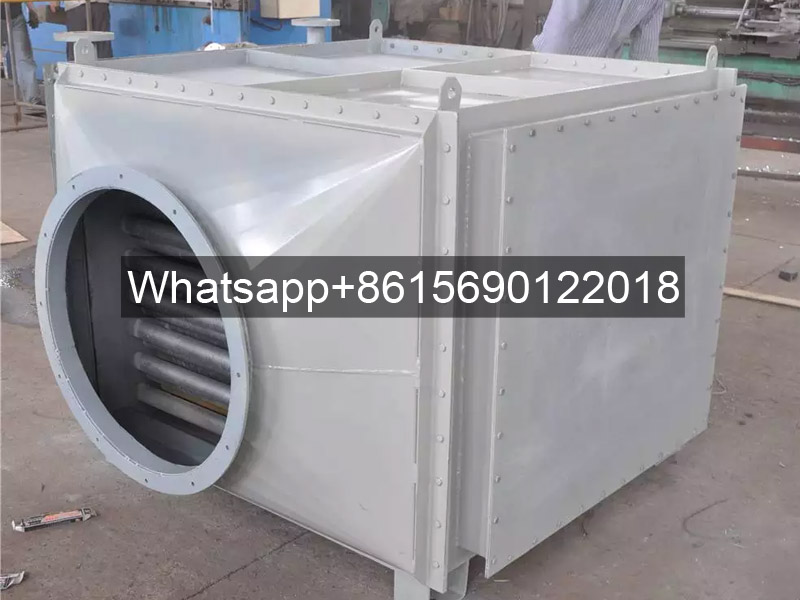
Industrial wastewater (such as production line cooling wastewater, dyeing wastewater, and chemical reaction wastewater) typically ranges in temperature from 30℃ to 120℃. Although the temperature is not high, the volume is large and the heat is stable, making it highly valuable for recovery. This type of equipment mainly uses “shell-and-tube heat exchangers” and “plate heat exchangers,” the core of which is to achieve heat transfer between wastewater and cold water through dense heat exchange channels.
For mildly corrosive wastewater (such as 80℃ cooling wastewater from a food processing plant, containing trace amounts of organic acids), shell-and-tube heat exchangers with built-in cold-wound galvanized finned tubes can be used. The galvanized layer resists wastewater corrosion, and the finned structure enhances heat exchange efficiency.
A food processing plant used this equipment to recover waste heat from cooling wastewater, heating the cold water from 20℃ to 50℃ for use in employee bathroom hot water supply, saving an average of 120m³ of natural gas per day, with a payback period of only 8 months.
For non-corrosive, high-flow wastewater (such as steel rolling mill cooling wastewater), plate heat exchangers are selected. Their metal plates (mostly stainless steel) offer high heat exchange efficiency and are compact, suitable for workshops with limited installation space.
3. Steam Waste Heat Recovery Equipment
Low-pressure steam and exhaust steam (pressure ≤ 0.8MPa, temperature ≤ 170℃) generated in industrial production will result in a significant waste of heat if directly discharged.
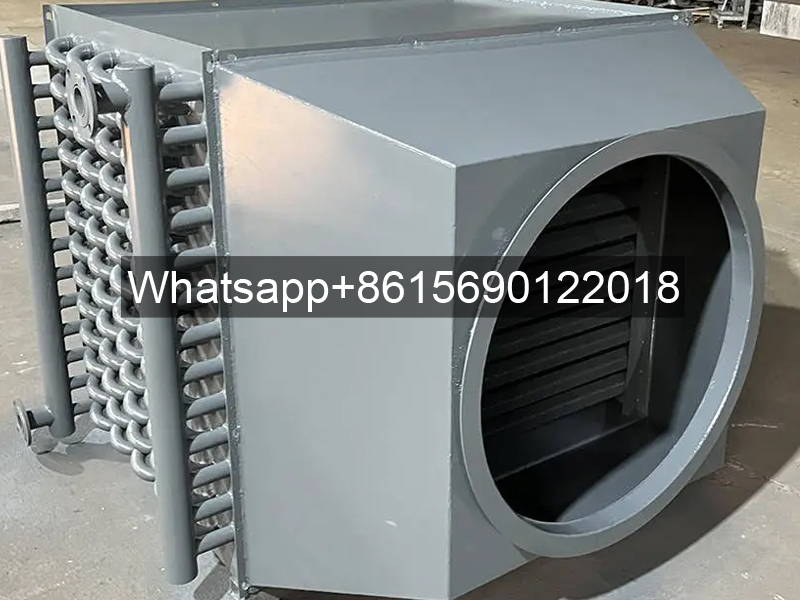
These recovery devices are divided into “heat recovery type” and “thermal power conversion type”: the heat recovery type uses finned tube heat exchangers to transfer steam heat to cold water or air for heating and drying; the thermal power conversion type combines an expander and a generator, using the steam pressure difference to drive the expander to generate electricity, realizing the conversion of heat energy into electrical energy.
In mildly corrosive steam scenarios (such as exhaust steam from chemical plants containing trace impurities), steam heat exchangers with built-in cold-wound galvanized finned tubes are particularly suitable.
A chemical plant introduced 0.6MPa, 160℃ exhaust steam into this device, which, after exchanging heat with cold water inside the tubes, produced 100℃ high-temperature water for preheating chemical reactors. A single unit saves 3,000 tons of steam consumption annually, reducing fuel costs by 2 million yuan.
II. Core Technology: Key to Improving Waste Heat Recovery Efficiency
1. Enhancing Heat Exchange Technology
Improving heat transfer efficiency by optimizing the structure and materials of heat exchange elements is the core direction. For example, the “spiral fins + interference fit” design of cold-wound galvanized finned tubes controls thermal resistance to 0.003-0.005 m²·K/W, improving heat exchange efficiency by 30%-50% compared to ordinary smooth tubes.
The “corrugated plate” design of plate heat exchangers increases fluid turbulence and reduces boundary layer thermal resistance, achieving a heat transfer coefficient of 3000-5000 W/(m²·℃), which is 2-3 times that of traditional shell-and-tube heat exchangers.
2. Anti-clogging and Anti-corrosion Technology
Industrial waste heat carriers often contain dust, impurities, or corrosive substances, easily leading to equipment clogging and corrosion. To address dust issues, flue gas waste heat recovery equipment is equipped with “pulse bag filters” or “cyclone separators” to remove dust before the flue gas enters the heat exchanger. To address corrosion issues, in addition to using cold-wound galvanized finned tubes and stainless steel materials, the surface of the heat exchange elements is treated with an “anti-corrosion coating” (such as PTFE coating) to extend equipment life.
A waste incineration plant adopted cold-wound galvanized finned tubes with an anti-corrosion coating in its flue gas heat exchanger. This reduced the equipment corrosion rate from 0.2 mm/year to 0.05 mm/year, extending its service life to over 10 years.
3. Intelligent Control Technology
Modern waste heat recovery equipment is often equipped with a “temperature sensor + flow regulating valve + PLC control system,” which can monitor the temperature and flow rate of the waste heat carrier and the parameters of the medium after heat exchange in real time, automatically adjusting the cold water/air flow rate to ensure the equipment operates under optimal conditions.
When the flue gas temperature is below 150℃ (no recovery value), the system automatically closes the heat exchanger inlet valve to avoid ineffective energy consumption; when the wastewater flow rate suddenly increases, the cold water flow rate is automatically increased to prevent equipment overheating and damage.
III. Application Scenarios: Energy-Saving Practices Covering Multiple Industries
1. Chemical Industry
In chemical production processes, the heating of reaction vessels and the condensation of distillation towers generate large amounts of high-temperature flue gas and wastewater. A chemical plant constructed a combined “flue gas-water heat exchanger + wastewater-water heat exchanger” system to recover waste heat from 380℃ reactor flue gas and 90℃ distillation wastewater. The recovered heat is used for reactor preheating and workshop heating, reducing annual standard coal consumption by 1200 tons and carbon emissions by 3000 tons. Simultaneously, it reduces wastewater discharge temperature and lowers environmental treatment costs.
2. Metallurgical Industry
The high-temperature flue gas exceeding 1000℃ generated by blast furnaces and converters in metallurgical plants is a valuable waste heat resource. A steel plant employs a “high-temperature flue gas – steam heat exchanger + thermoelectric conversion system,” first converting the heat from the flue gas into 1.2MPa steam, which then drives an expander to generate electricity. A single system has an installed capacity of 500kW and an annual power generation of 4 million kWh, meeting 10% of the plant’s electricity demand.
The low-temperature steam generated from the power plant is introduced into a heat exchanger with built-in cold-wound galvanized finned tubes to heat chilled water for makeup water in the rolling mill’s cooling system, achieving a cascaded utilization of “high-temperature power generation and low-temperature heating.”
3. Food Industry
The drying and sterilization processes in food processing consume a large amount of heat energy, while the cooling wastewater and drying exhaust gas from the production line contain stable waste heat. A biscuit factory uses a “tail gas-air heat exchanger” (with built-in cold-wound galvanized finned tubes) to recover 120℃ waste heat from the drying tail gas, which heats fresh air before being fed into the drying oven, replacing part of the natural gas heating.
Simultaneously, a “wastewater-water heat exchanger” recovers 60℃ waste heat from the cooling wastewater, which is used to preheat the water for raw material washing. These two measures combined save 300,000 m³ of natural gas annually, reducing product drying energy consumption by 25%.
IV. Operation and Maintenance Key Points: Ensuring Long-Term Stable Equipment Operation
1. Regular Cleaning and Descaling
Flue gas waste heat recovery equipment: Every 1-2 months, use 0.3-0.6MPa compressed air to blow away accumulated dust from the finned tubes; every six months, perform high-pressure water flushing (water temperature ≤50℃); if the flue gas contains sticky impurities, soak and clean with a neutral detergent (pH 6-8) every quarter to prevent fin blockage.
Wastewater Waste Heat Recovery Equipment: Check the inlet and outlet pressure difference of the heat exchanger monthly. When the pressure difference exceeds 0.1 MPa, the heat exchange channel must be disassembled and cleaned. Perform chemical descaling annually (using a 10%-15% hydrochloric acid solution, suitable for carbon steel/galvanized materials). After descaling, rinse with clean water until neutral and passivate to prevent internal corrosion.
2. Corrosion Monitoring and Protection
Regularly (quarterly) inspect the corrosion of heat exchange elements, especially the integrity of the zinc layer on cold-wound galvanized finned tubes. If local damage to the zinc layer is found, repair it promptly with zinc powder paint (zinc content ≥95%), with a coating thickness of not less than 80 μm. For high-temperature and highly corrosive environments, check the coating thickness every six months. When the coating thickness is less than 50 μm, reapply the anti-corrosion coating.
3. System Inspection and Parameter Adjustment
Daily inspection of equipment inlet and outlet temperatures, pressures, flow rates, and other parameters to ensure they meet design values; weekly checks of the intelligent control system’s operating status, and calibration of temperature sensors and flow control valves; adjustment of heat exchange medium flow rates based on seasonal changes (e.g., increased heating demand in winter, increased cooling demand in summer) to optimize waste heat utilization efficiency and avoid energy waste.