
Improve Heat Transfer with Custom External Finned Tubes
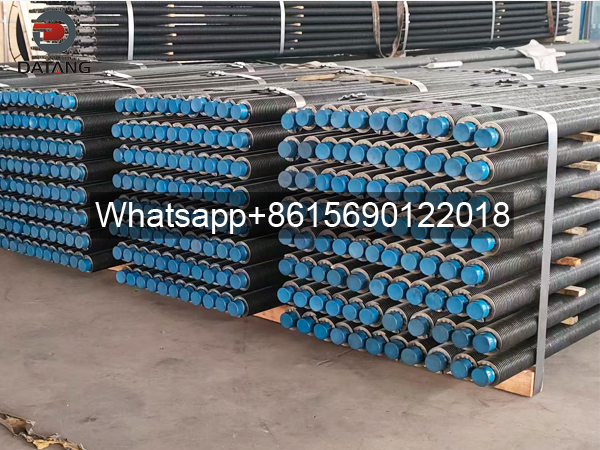
When you need to improve heat transfer on the outside of a tube, external finned tubes are an effective solution.
External finned tubes have additional fins attached to the outer surface of the base tube. These fins increase the heat transfer area and help improve heat exchange between the tube and the surrounding fluid.
They are widely used in industrial boilers, economizers, air preheaters, waste heat recovery systems and other heat exchange equipment.
At Cangzhou Datang Steel Pipe, we manufacture different types of external finned tubes for industrial applications. You can choose the fin type, base tube material, fin material, dimensions and manufacturing process according to your project requirements.
Contact Datang to discuss your finned tube requirements and get a customized quotation.
What Are External Finned Tubes?
External finned tubes are heat transfer tubes with fins attached to their outer surface.
They are mainly used when the heat transfer coefficient on the outside of the tube is lower than that on the inside. In this situation, the outside surface can limit the overall heat transfer performance.
Adding external fins increases the available heat transfer area. This helps transfer more heat between the tube wall and the surrounding fluid.
The base tube carries the internal fluid, while the external fins improve heat transfer on the outside.
The performance of an external finned tube depends on several factors. These include fin height, fin thickness, fin spacing, fin material and the bond between the fin and the base tube.
Choosing the right fin structure is important. Your operating temperature, working pressure, fluid properties and installation conditions should all be considered during product selection.
Types of External Finned Tubes
Different heat exchange systems require different fin structures. Datang can manufacture several types of external finned tubes to meet your application requirements.
1. Spiral Finned Tubes
Spiral finned tubes use a metal strip wound around the outer surface of a base tube. The fin strip is fixed to the tube by different manufacturing processes.
You can choose continuous spiral fins or serrated spiral fins.
Continuous spiral fins provide a simple structure and stable manufacturing process. Serrated fins have openings along the fin edge. These openings help disturb the airflow and can improve heat transfer under suitable operating conditions.
Spiral finned tubes are widely used in industrial boilers, economizers, air preheaters and waste heat recovery systems.
2. H-Type Finned Tubes
H-type finned tubes have two rectangular fins welded to opposite sides of the base tube. The fins form an H-shaped structure.
You can also choose single H-type or double H-type finned tubes according to your equipment design.
The wide spaces between fins allow flue gas and ash to pass through more easily. This structure helps reduce ash accumulation and improves resistance to erosion in suitable applications.
H-type finned tubes are commonly used in coal-fired boilers, biomass boilers and waste heat recovery equipment.
3. Longitudinal Finned Tubes
Longitudinal finned tubes have fins arranged along the length of the base tube.
The fins run parallel to the main fluid flow direction. This design can reduce flow resistance in properly designed heat exchanger systems.
You can use longitudinal finned tubes in shell-and-tube heat exchangers and other industrial heat transfer equipment.
The number, height and thickness of the fins can be designed according to your heat transfer requirements.
4. Flat and Corrugated Finned Tubes
Flat and corrugated finned tubes use thin metal fins attached to the base tube.
Flat fins provide a simple surface structure. Corrugated fins have a wavy shape that can improve airflow disturbance and heat transfer.
These designs are suitable for compact heat exchange equipment where space and airflow resistance are important considerations.
The fin shape and arrangement should be selected based on your operating conditions.
5. Oval Finned Tubes
Oval finned tubes use an oval-shaped base tube instead of a round tube.
The fins follow the shape of the base tube. This design can offer better aerodynamic performance in some air-side heat exchangers.
Compared with conventional round-tube arrangements, oval tubes can help reduce air-side pressure drop under suitable design conditions.
They are suitable for heat exchange systems with limited installation space or strict airflow requirements.
6. Wear-Resistant Finned Tubes
Wear-resistant finned tubes are designed for applications with high dust content, high gas velocity or abrasive particles.
You can select suitable wear-resistant materials, surface coatings or structural designs to improve service life.
These tubes are commonly used in industrial boilers, flue gas heat recovery systems and other demanding operating environments.
How Do External Finned Tubes Improve Heat Transfer?
The main purpose of external fins is to increase the heat transfer area on the outside of the base tube.
When the external fluid has a relatively low heat transfer coefficient, a plain tube may not provide enough heat transfer area for the required duty.
External fins provide more surface area without requiring a similar increase in the number of base tubes.
However, more fin area does not always mean better heat transfer. Fin efficiency, fin spacing, material conductivity and airflow resistance also affect actual performance.
When selecting your external finned tubes, you should consider the following factors.
Fin Height
Fin height determines how far the fin extends from the base tube. Higher fins provide more surface area, but they may also affect airflow and fin efficiency.
Fin Thickness
Fin thickness affects mechanical strength, heat conduction and material consumption. The correct thickness depends on the operating environment and manufacturing requirements.
Fin Spacing
Fin spacing affects the heat transfer area and the flow passage between fins. Smaller spacing increases the number of fins per unit length, but it may also increase pressure drop and the risk of fouling.
Fin Material
The thermal conductivity of the fin material affects heat transfer performance. You should also consider corrosion resistance, operating temperature and compatibility with the base tube.
Materials for External Finned Tubes
Your material selection should match the operating temperature, pressure, corrosion conditions and heat transfer requirements of your equipment.
Datang can supply external finned tubes with different base tube and fin materials.
| Component | Available Materials |
|---|---|
| Base Tube | Carbon Steel, Stainless Steel, Alloy Steel |
| Fin Material | Carbon Steel, Stainless Steel, Aluminum, Copper |
| Other Options | Customized material combinations |
Different material combinations can be used for different operating environments.
For example, carbon steel is a common choice for general industrial heat exchange applications. Stainless steel can be selected when better corrosion resistance is required. Aluminum and copper fins offer good thermal conductivity in suitable operating conditions.
The final material combination should be confirmed according to your design requirements and applicable standards.
Applications of External Finned Tubes
External finned tubes are used in many industries. They are especially useful when you need to increase the heat transfer area on the gas side of a heat exchanger.
Industrial Boilers
Finned tubes are used in boiler economizers and other heating surfaces. They help recover heat from flue gas and improve overall energy utilization.
Waste Heat Recovery
In industrial waste heat recovery systems, finned tubes transfer heat from hot exhaust gas to water, air or other working fluids. Spiral and H-type finned tubes are common choices for different dust and flow conditions.
Air Preheaters
External finned tubes can be used in air preheating equipment. They transfer heat from hot gas to incoming air and help reduce fuel consumption.
Petrochemical and Chemical Industry
Heat exchange equipment in petrochemical and chemical plants often requires materials and structures suited to specific temperatures, pressures and corrosion conditions. External finned tubes can be designed to meet these requirements.
Industrial Heating Systems
Finned tubes are also used in industrial air heating and ventilation equipment. They increase the heating surface and support efficient heat transfer.
Why Choose Datang for External Finned Tubes?
When you purchase finned tubes, product quality is not the only factor to consider. Manufacturing experience, material control and technical support are also important.
Cangzhou Datang Steel Pipe focuses on finned tube manufacturing and provides customized products for different industrial applications.
With around 20 years of experience in the finned tube industry, Datang can support your project from product selection to manufacturing.
Customized Manufacturing
You can specify the base tube material, fin material, fin height, fin thickness, fin spacing and tube length. We can manufacture according to your drawings and technical requirements.
Multiple Fin Structures
We provide different finned tube types for different heat transfer applications. You can select the structure that matches your equipment design.
Technical Support
Our team can review your drawings and technical specifications. We can also provide support with product selection and finned tube design.
Quality Control
Material inspection and manufacturing checks help ensure that your products meet the agreed technical requirements.
International Project Support
We support overseas customers with product documentation, export packing and delivery arrangements.
Request a Quote for External Finned Tubes
Are you looking for a reliable external finned tube manufacturer for your heat exchanger project?
Send us your drawings, technical specifications or project requirements. Our team will review your information and help you select a suitable product.
To help us prepare an accurate quotation, please provide:
- Base tube material and outside diameter
- Fin material and fin type
- Fin height, thickness and spacing
- Tube length
- Operating temperature and pressure
- Required quantity
- Applicable manufacturing standard
If you do not have complete specifications, you can also send us your equipment drawings or application details.
Contact Cangzhou Datang Steel Pipe today for customized external finned tubes.
Website: https://www.dtfintube.com/
Email:datangfintube@gmail.com
WhatsApp: +86 156 9012 2018
Frequently Asked Questions
1. What is the typical service life of external finned tubes?
The service life depends on operating temperature, corrosion, dust content, gas velocity and maintenance conditions. Proper material selection and regular inspection can help extend the service life of finned tubes.
2. Can external finned tubes be used in high-dust environments?
Yes. They can be used in high-dust applications, but the fin structure must match the ash content and gas flow conditions. For heavy dust conditions, wider fin spacing and suitable wear-resistant designs may help reduce fouling and erosion.
3. How do you prevent corrosion between the fins and the base tube?
The connection quality between the fin and base tube is important. You should select compatible materials and suitable manufacturing processes. The choice also depends on moisture, operating temperature and the chemical properties of the surrounding gas.
4. Do external finned tubes require regular cleaning?
Yes. Dust, ash and other deposits can accumulate between the fins during operation. Regular cleaning helps maintain heat transfer performance and prevents excessive pressure drop. The cleaning method should match the fin structure and deposit type.
5. What causes finned tubes to fail during operation?
Common causes include corrosion, erosion, thermal fatigue, vibration and mechanical damage. Poor material selection and unsuitable operating conditions can also shorten service life. Regular inspection helps identify these problems early.
6. Can external finned tubes replace existing plain tubes?
In some heat exchanger systems, finned tubes can replace plain tubes to increase the heat transfer area. However, you should first check the available installation space, airflow resistance, pressure drop and equipment design. A technical review is recommended before replacement.